
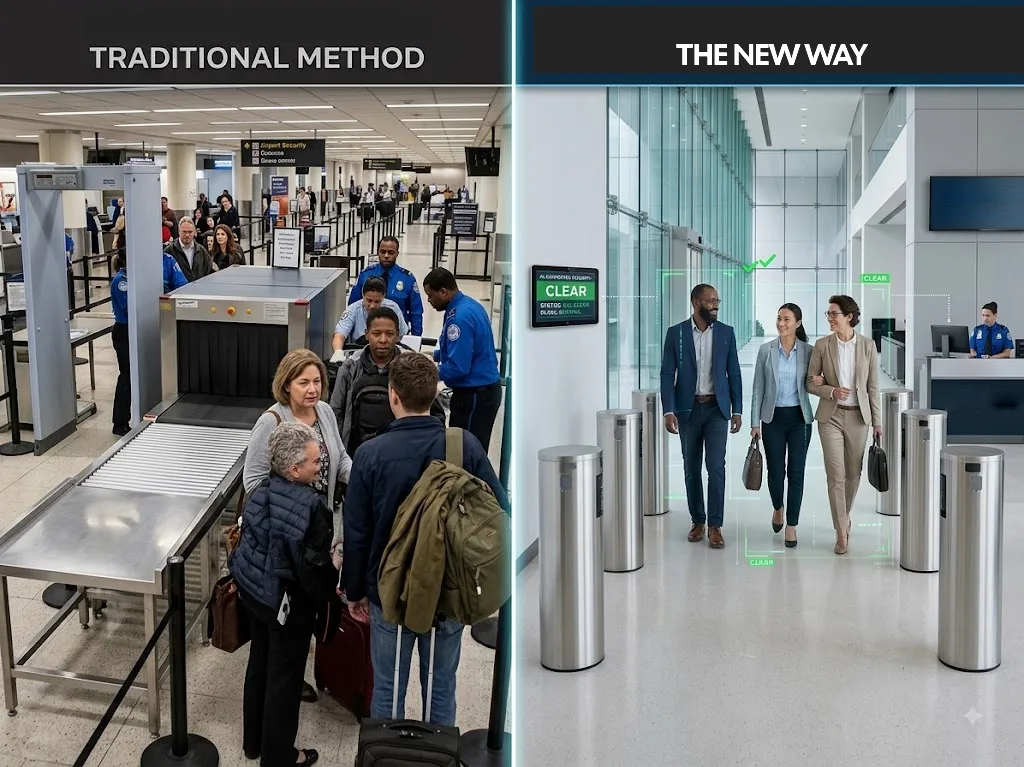
In our previous post , we examined how traditional screening often creates a conflict between safety and operational efficiency. The future of security relies on screening that is less intrusive, but how do we achieve that without compromising safety?
From Manual Screening to Intelligent Detection
Traditional screening depends heavily on manual checks. A person approaches a checkpoint, stops, and undergoes screening. However, modern systems add a crucial layer: Artificial Intelligence and Machine Learning.
The primary challenge with traditional metal detectors isn’t just finding metal—it is differentiating between everyday items (phones, keys, laptops, tools) and actual threats. Advanced intelligent systems analyze characteristics and patterns in real-time, drastically reducing false positives and keeping crowds moving smoothly.
AI Supports Security Professionals—It Doesn’t Replace Them
While AI can process vast amounts of data and flag potential threats instantly, security decisions still require human context. Security directors and guards understand their facility, its culture, and its unique risks.
The strongest security posture always combines three elements:
- Intelligent Technology
- Trained Personnel
- Clear Operational Procedures
Technology identifies and communicates potential risks, but trained professionals evaluate the situation and take action.
Detection Is Only the Beginning
Evaluating a threat detection system based solely on its accuracy rate misses half the picture. The real test is what happens after an alert occurs:
- How is the alert communicated, and who receives it?
- What actionable information do security guards receive on their screens?
- How quickly can team members assess and respond?
A system that produces alerts without clear, actionable data simply adds noise to an already busy environment.
Stay tuned for our next blog, where we will cover how to integrate intelligent threat detection into your facility’s existing operations and evaluate technology beyond the feature list.