When evaluating new threat detection systems for your facility, it is easy to get caught up in spec sheets: How fast is it? How many people can it scan per hour? While these metrics matter, they don’t tell you how a system performs in a live environment during peak traffic.
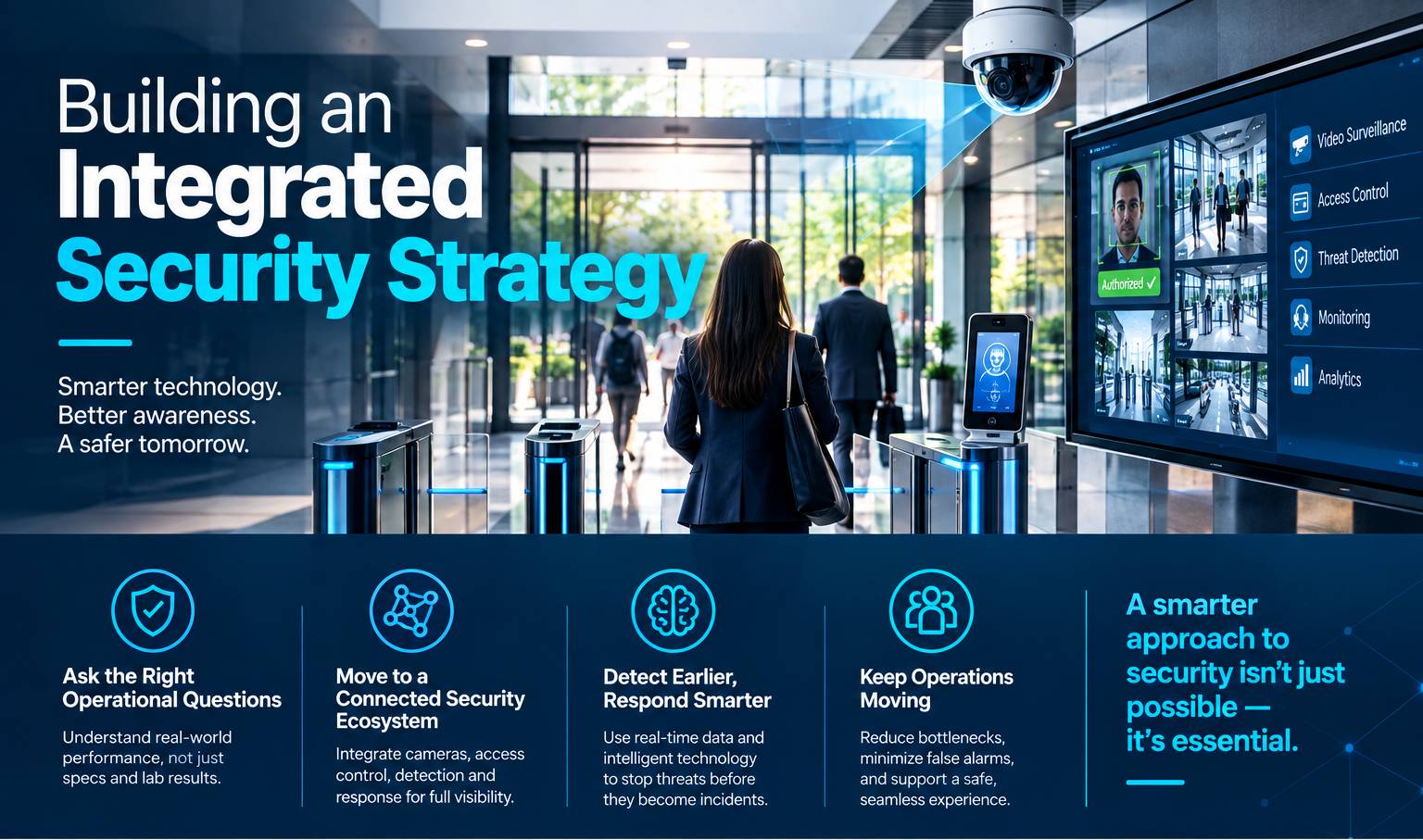
Asking the Right Operational Questions
Before committing to new security hardware, security directors should ask broader operational questions:
- How does this technology affect the natural flow of foot traffic?
- How many guards are required to manage false alarms versus actual threats?
- Does the system integrate with our existing cameras, access control, and VMS?
- What information is archived for post-event analysis?
A tool may perform flawlessly in a controlled demo, but create major bottlenecks in real-world conditions if it doesn’t fit your facility’s daily workflow.
The Shift Toward Connected Security
Security is moving away from isolated, siloed hardware. Cameras, access control, intelligent monitoring, threat detection, and response teams must operate within a unified ecosystem.
Integration provides security leadership with a comprehensive view of facility operations. However, technology should never mean simply adding more screens or alerts for guards to monitor—it should provide better awareness so your team can make faster, smarter decisions.
A Modern Security Standard
Modern security management focuses on three key goals:
- Detect threats earlier in the entry process.
- Respond more intelligently with real-time data.
- Disrupt normal operations as little as possible.
The security entrance of the future isn’t defined by long lines or invasive barriers. It relies on intelligent technology operating seamlessly in the background, empowering your team to act antes de a threat becomes an incident.
Does your current security strategy protect your facility while allowing normal operations to thrive? Contact the team at Soluções inteligentes de TC to learn how we help facilities transition to intelligent, non-intrusive threat detection.